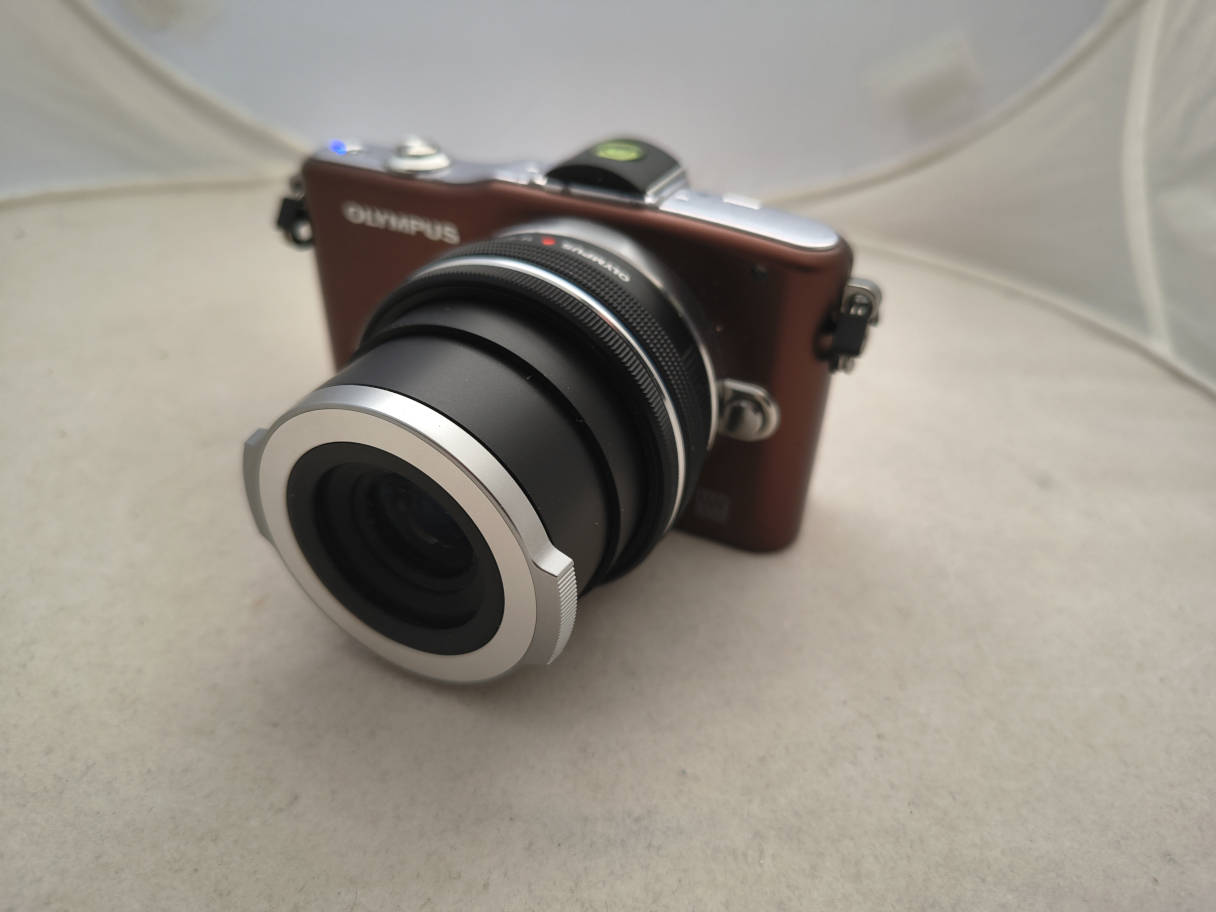
These are Micro Four Thirds cameras, their sensor size is much smaller than the Sony A7.
As I just wanted to test Lomography plastic lenses for the MFT (Micro Four Thirds)
system that I don't use otherwise, I bought cheap cameras second hand.
It wasn't as easy as I thought. There are many faulty cameras around
that are sold as working.
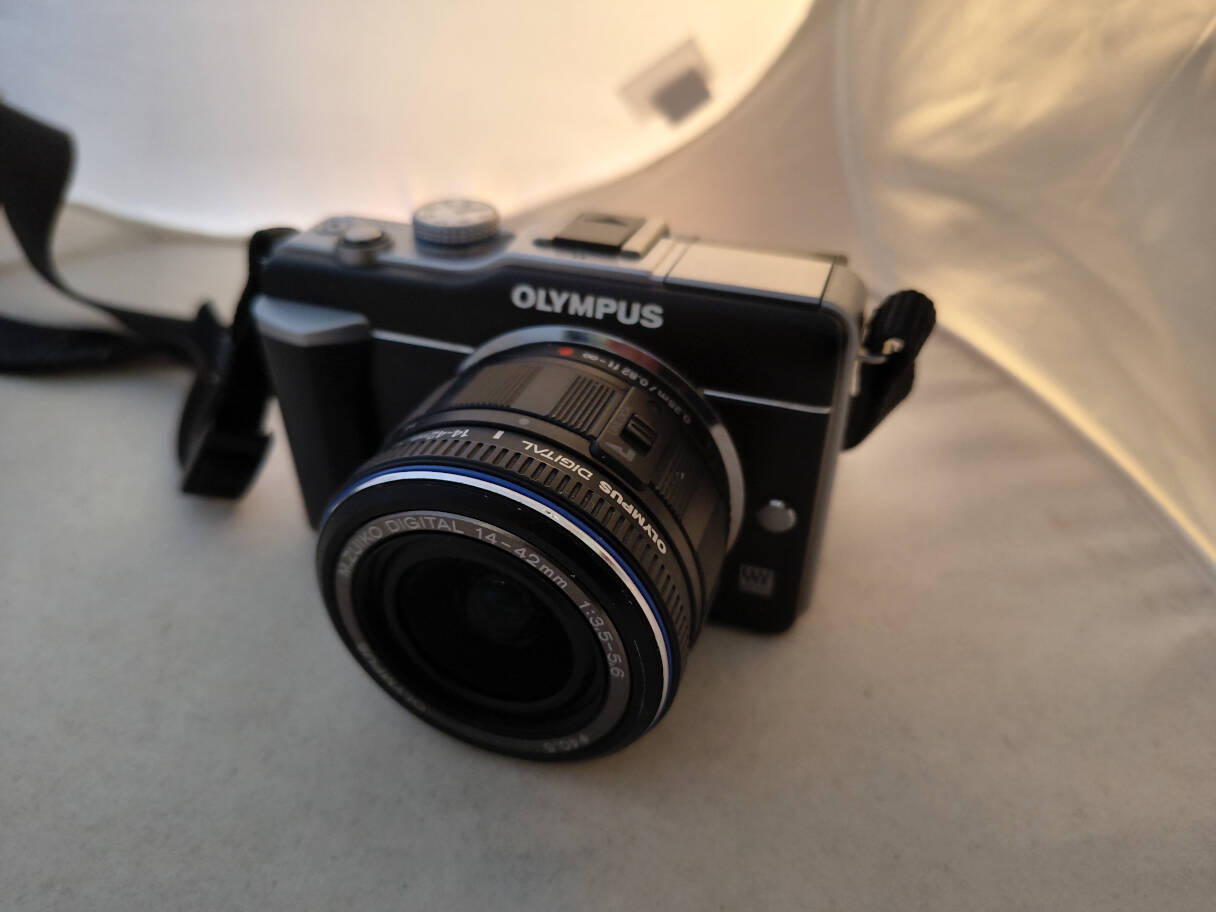
The first that I bought was an Olympus Pen P-L1,
an early one. The Pen digital system has several lines, the E-P, which
has the most features, but is bigger, the EPL (L for light), smaller
and lighter, the E-PM (M for mini) which is again smaller and lighter
and there is the Pen F, named after the famous half frame analog camera
from the 60s, based on the E-P, adapted in style to the original and
quite expensive.
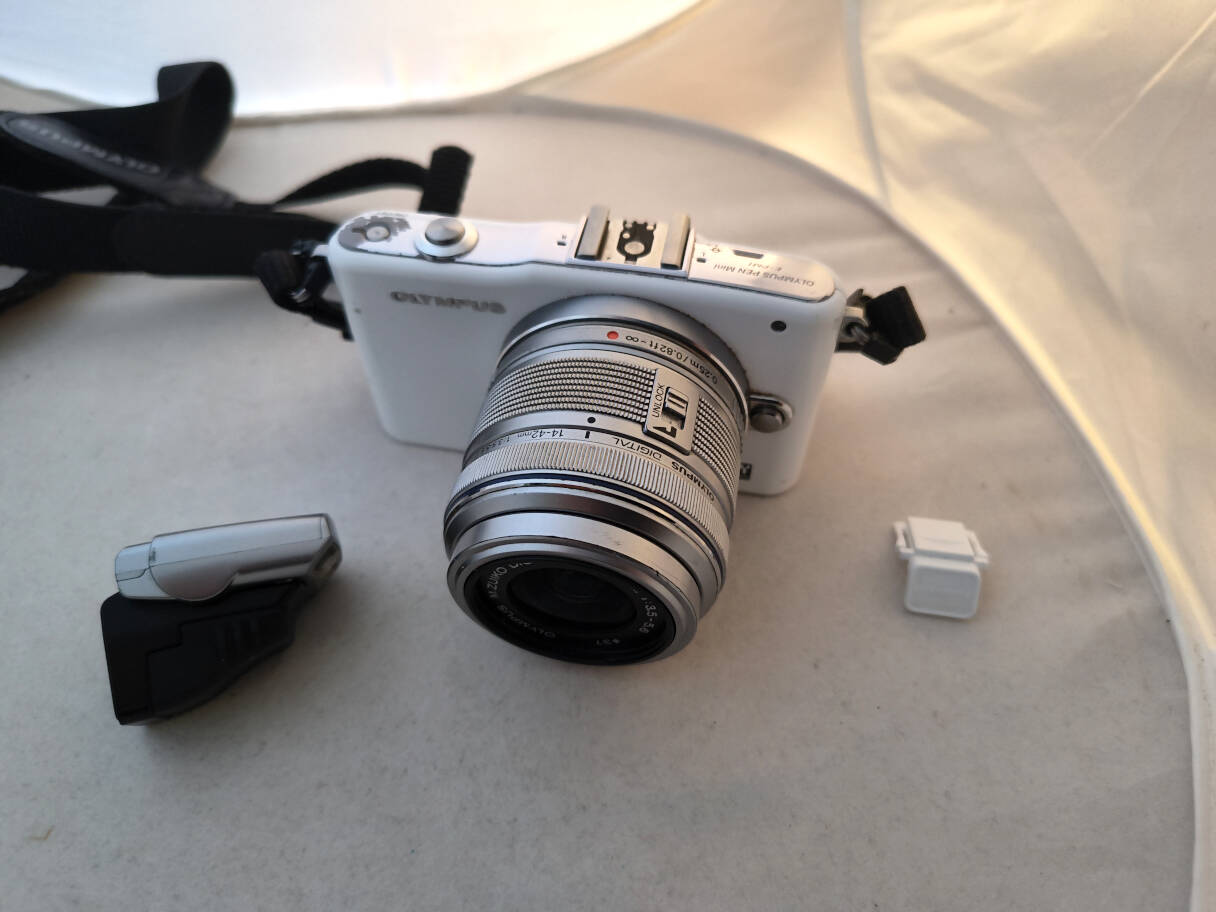
So this is a E-PL1 model with its 14-42 zoom (28-84 equiv.) lens in
retracted position The camera was sold as working fine, but
obviously it had not been used for years. One of the 2 batteries was
dead, the lens did not work and neither did the memory slot. Cleaning
the slot and the contacts of the lens brought the camera back to life.
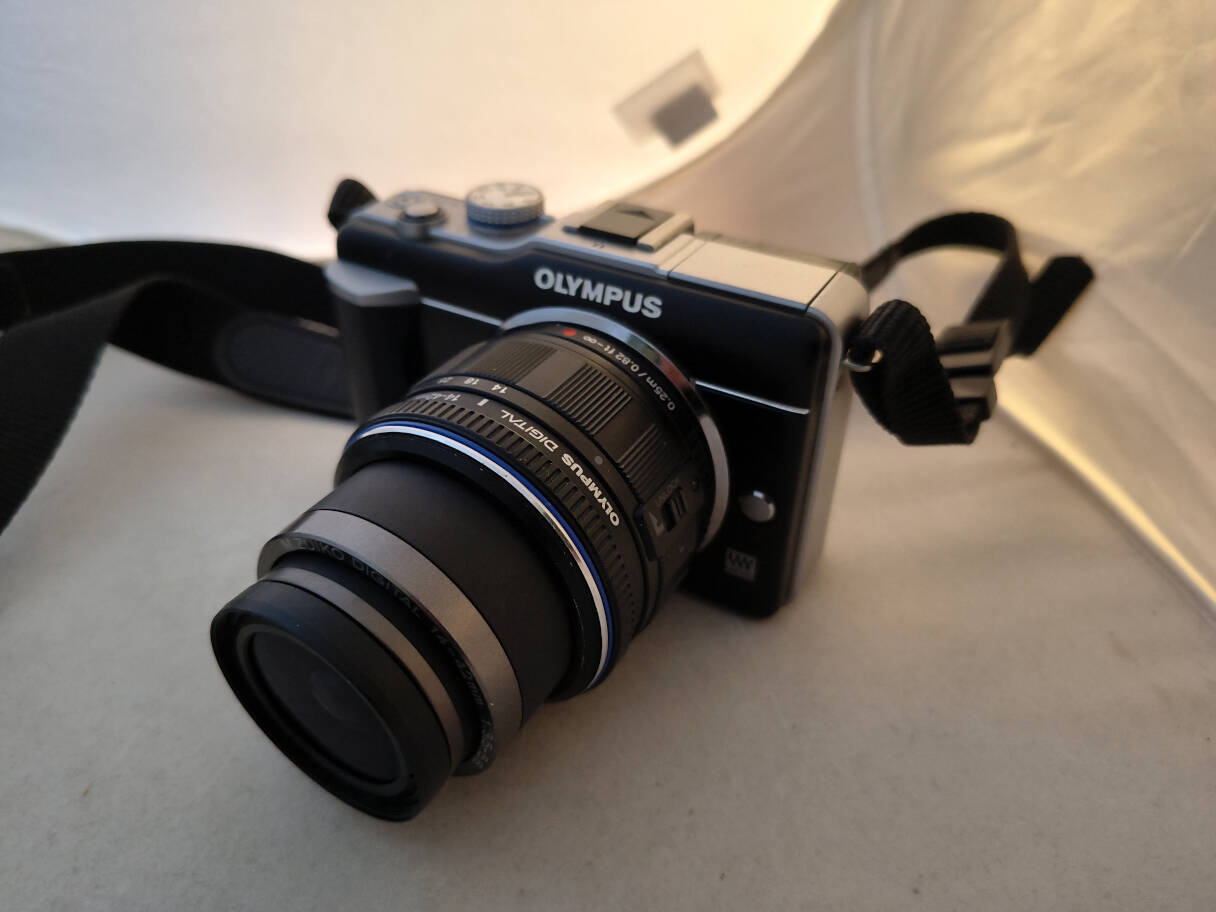
Lens extended. Changing the focal length is manual.
Bottom with battery and card compartment and tripod socket. Takes a BLS-1 battery.
Top with hot shoe (covered), mode dial, shutter and on/off button.
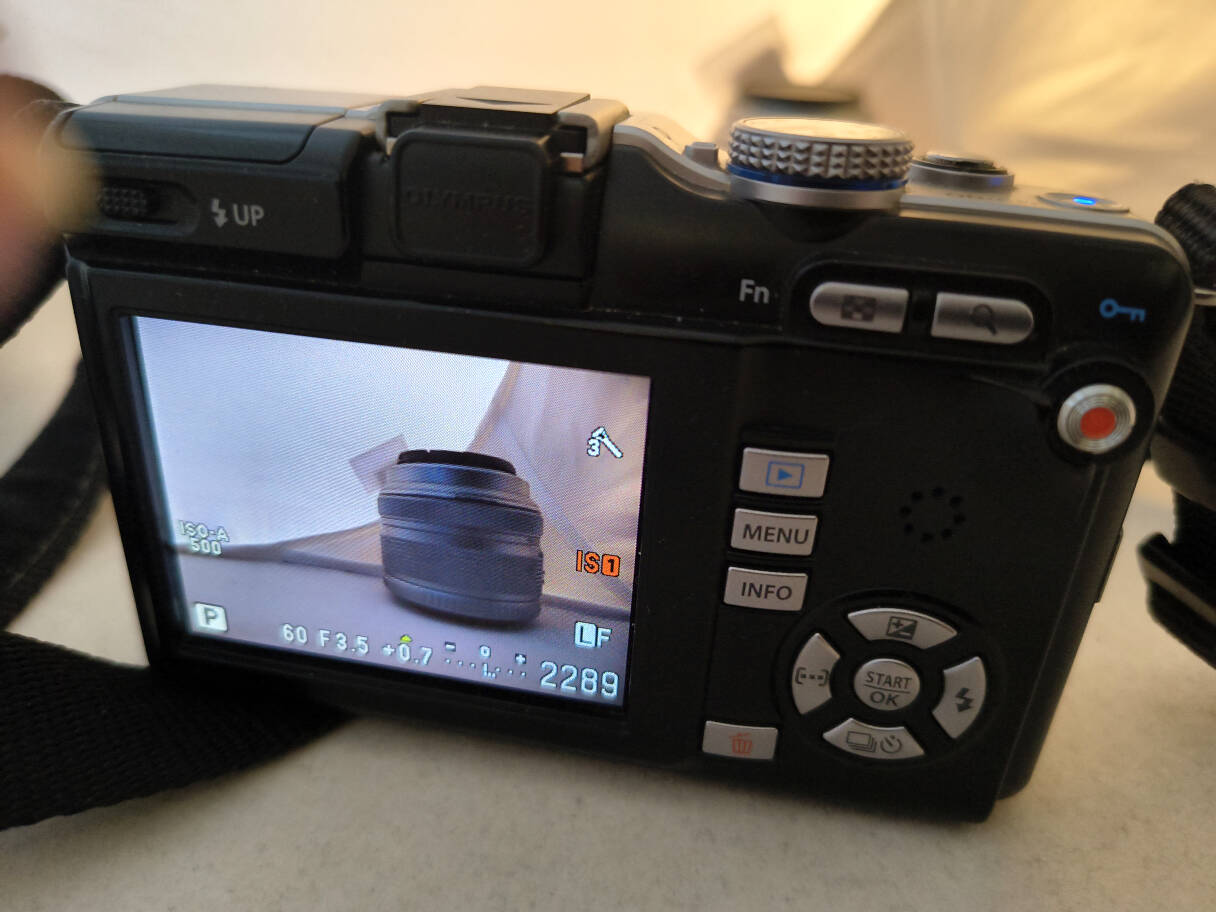
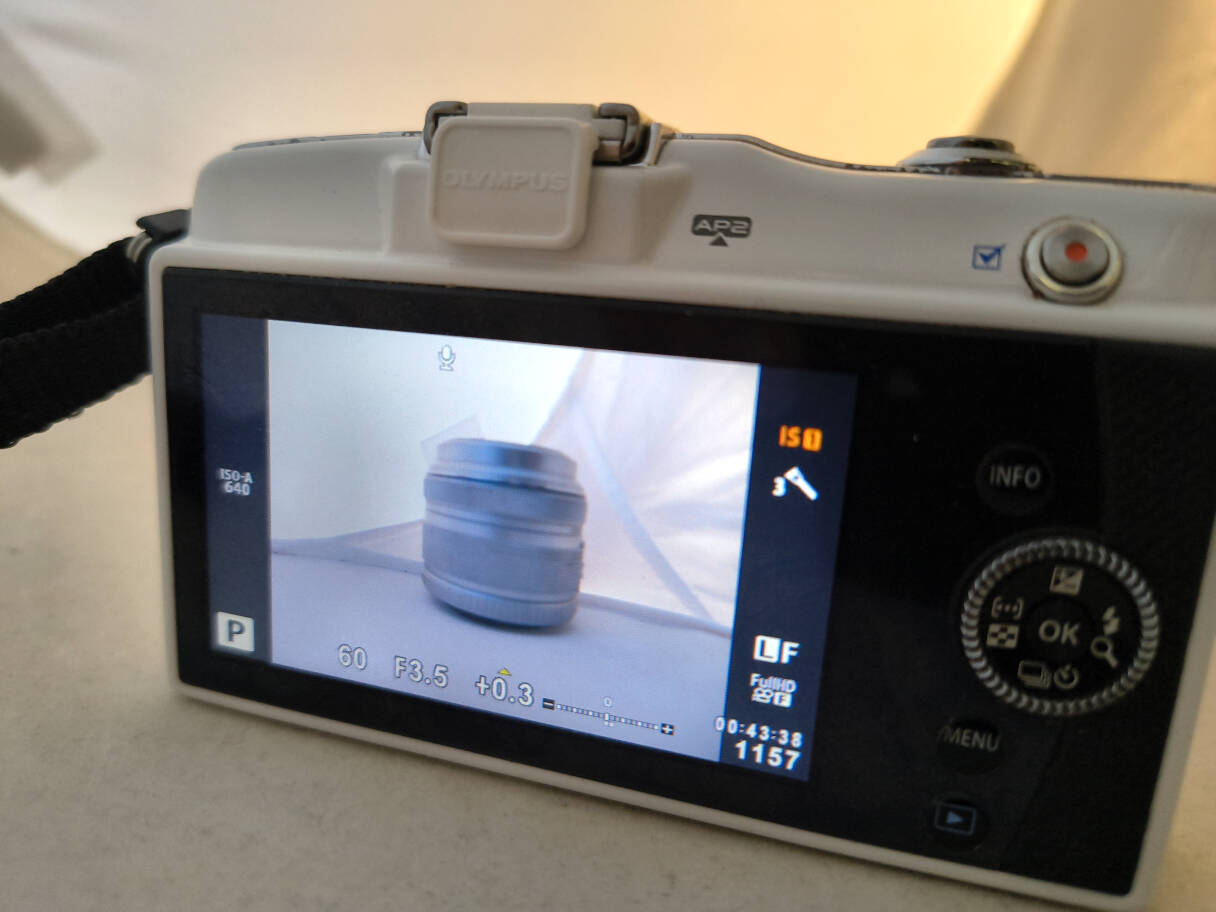
Back with screen and operation panel. Up left there is a switch for a
built-in flash, not present in some later models. Note the red IS on
the screen. IS is broken and the red indication keeps blinking. This is
a common issue for early cameras of all lines. And no, setting the IS off does
not help.
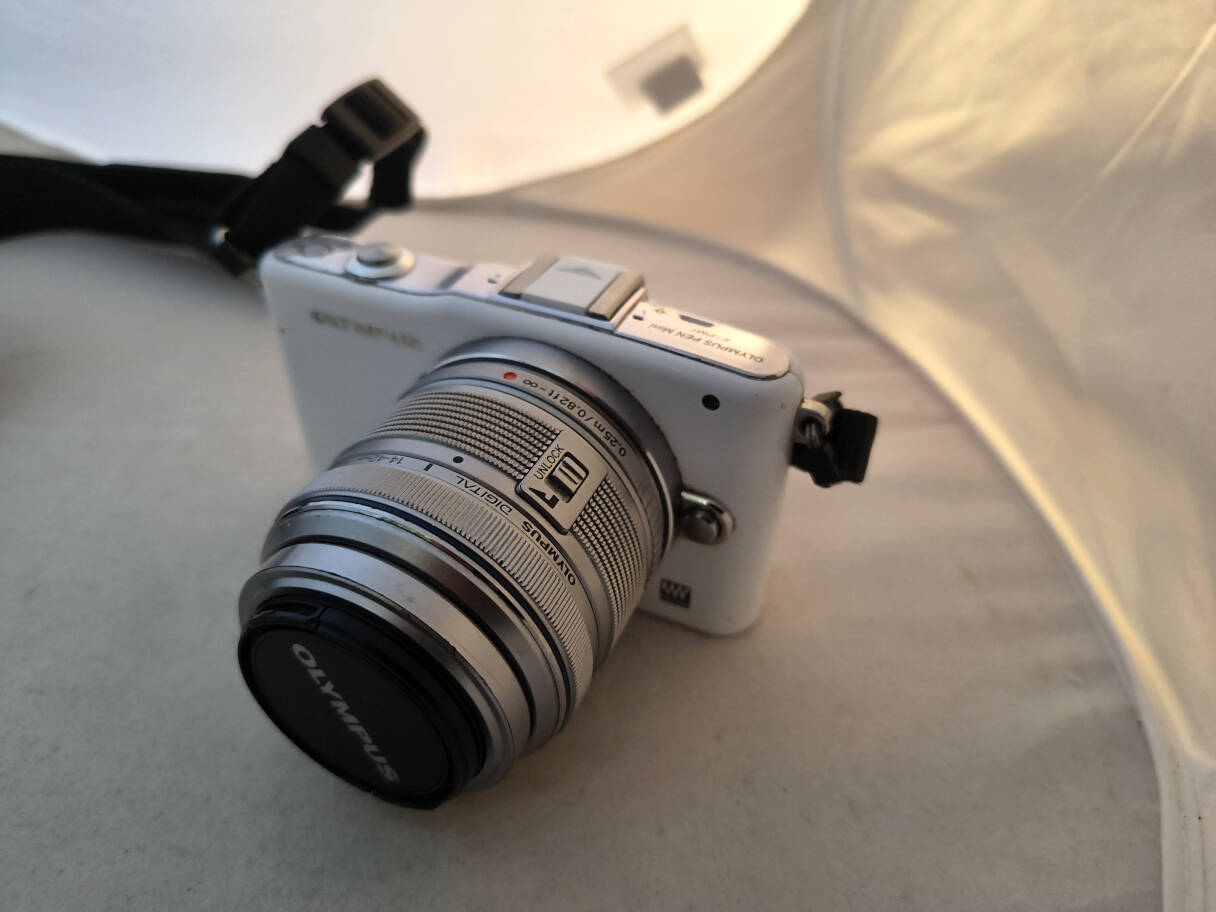
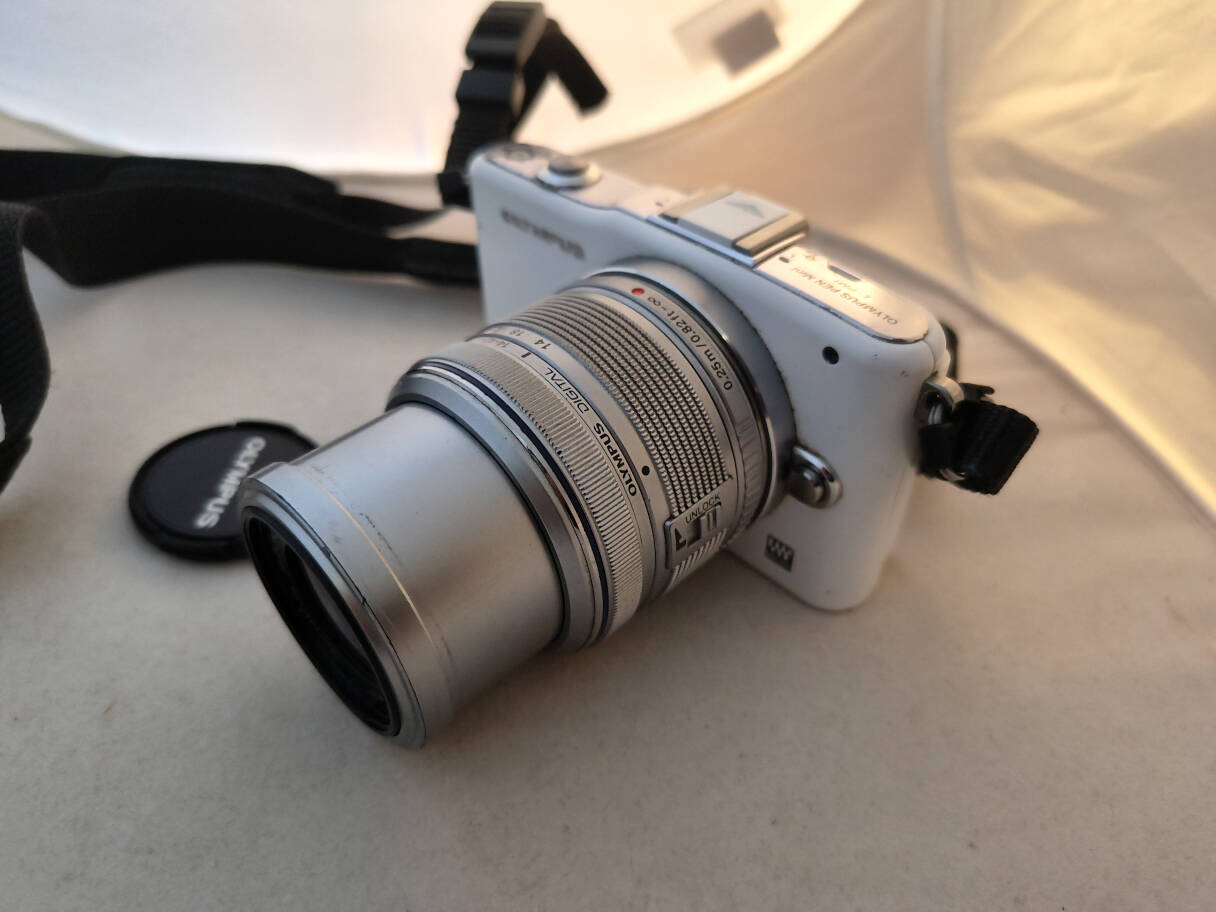
This is a E-PM1 camera. It's smaller, has less buttons, but has nearly
the same features, however some must be accessed via the menu.
Camera with
its 14-42 zoom (28-84 equiv.) lens in retracted position The camera
was sold as working and tested, but its lens was dead. Cleaning the contacts of the lens did not help.
Lens extended.
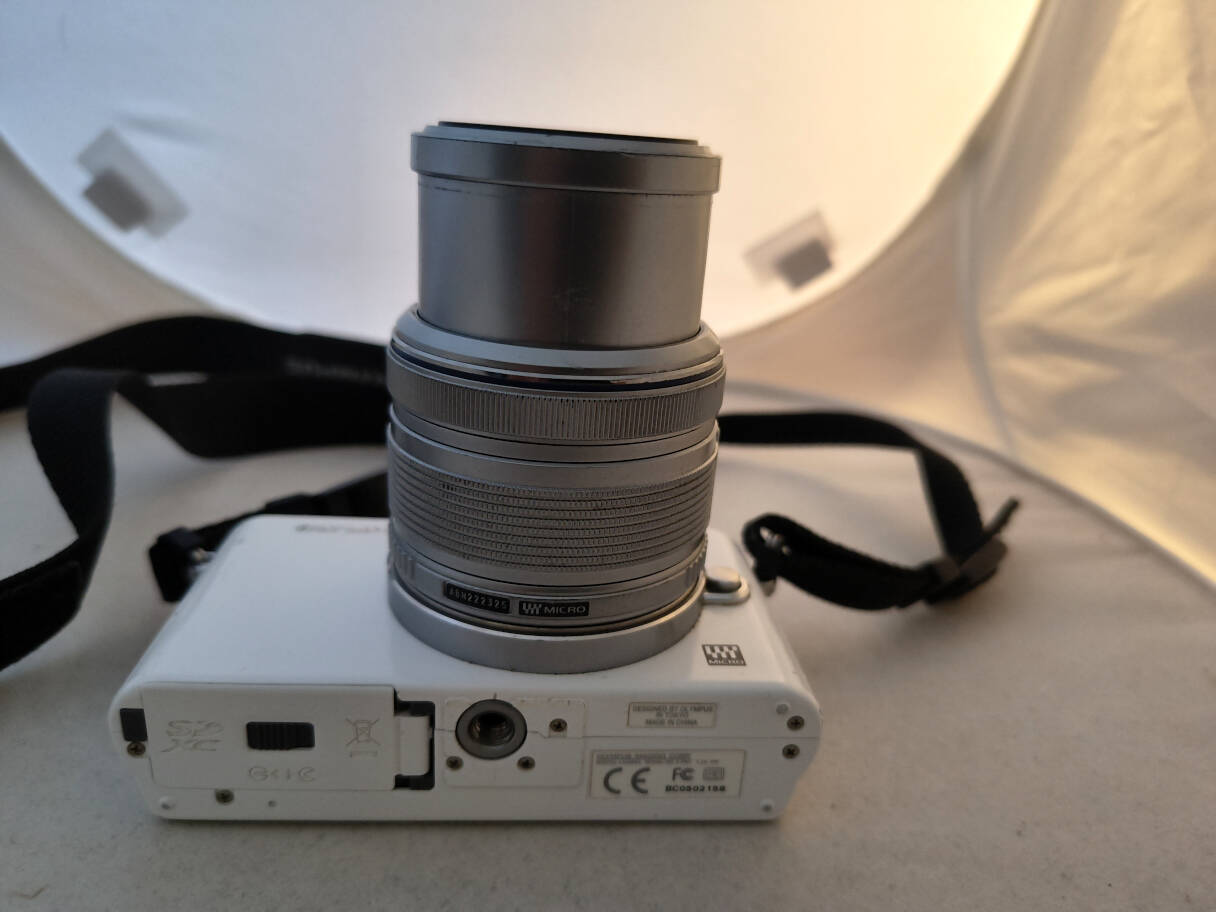
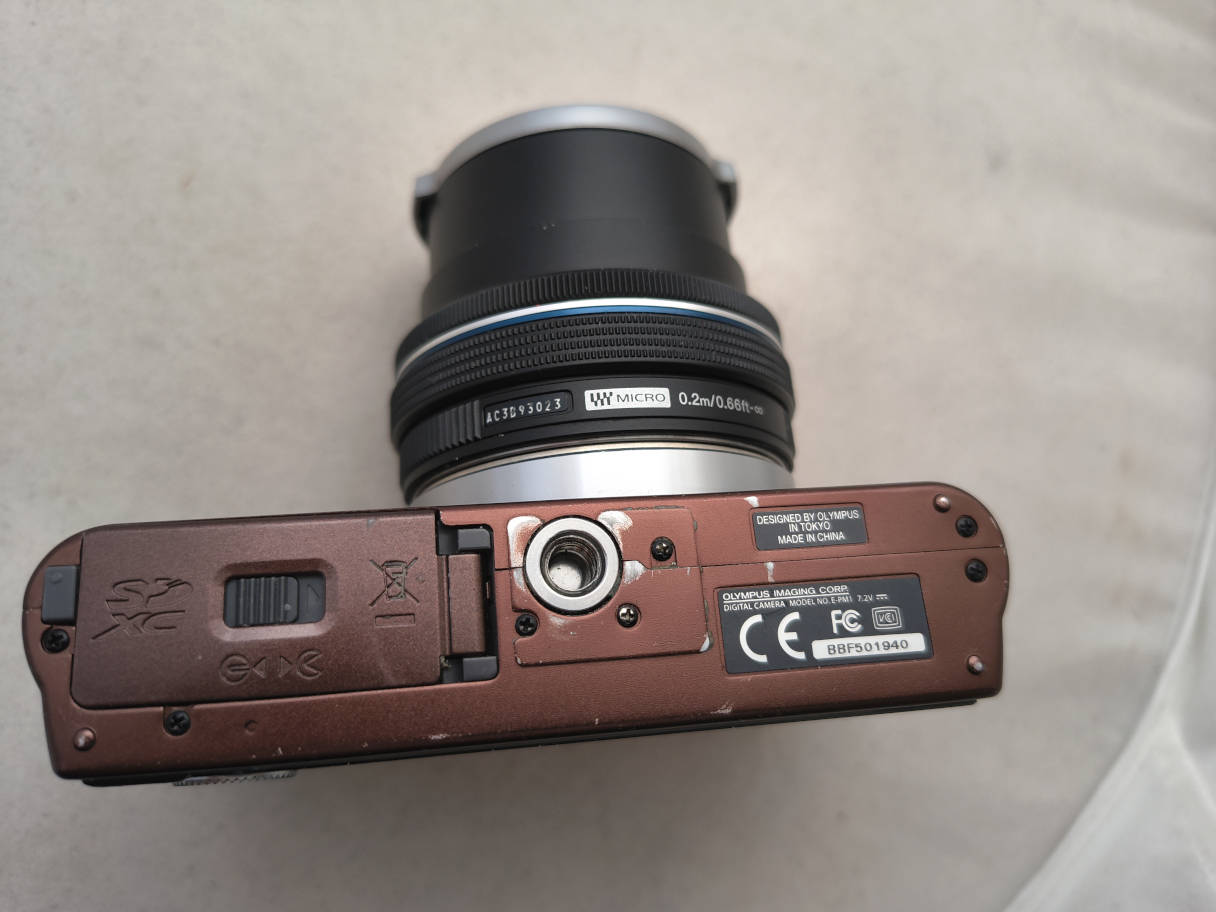
Bottom
with battery and card compartment and tripod socket. Takes a BLS-5
battery. BLS-1 and BLS-5 are the same size, but need different chargers
as the cantacts are not exactly the same.
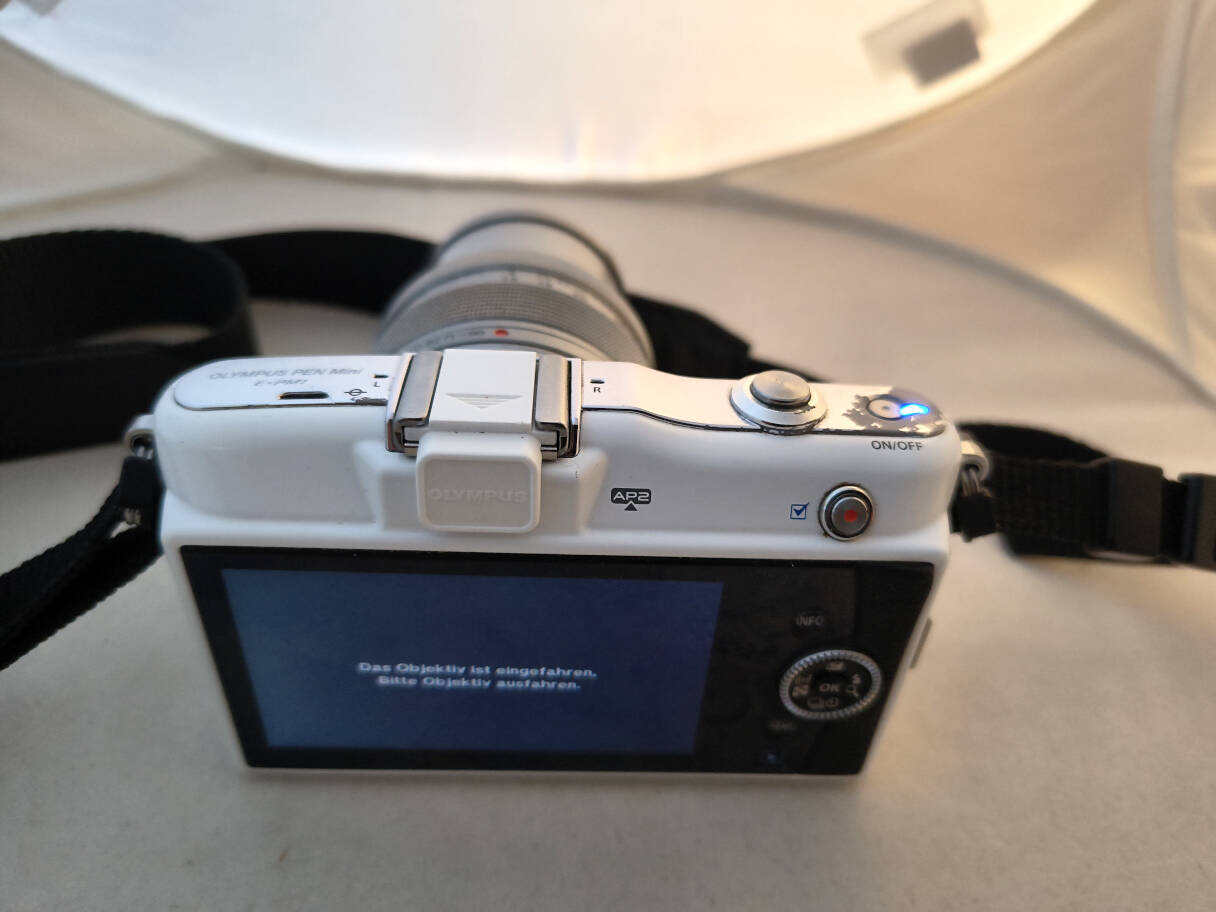
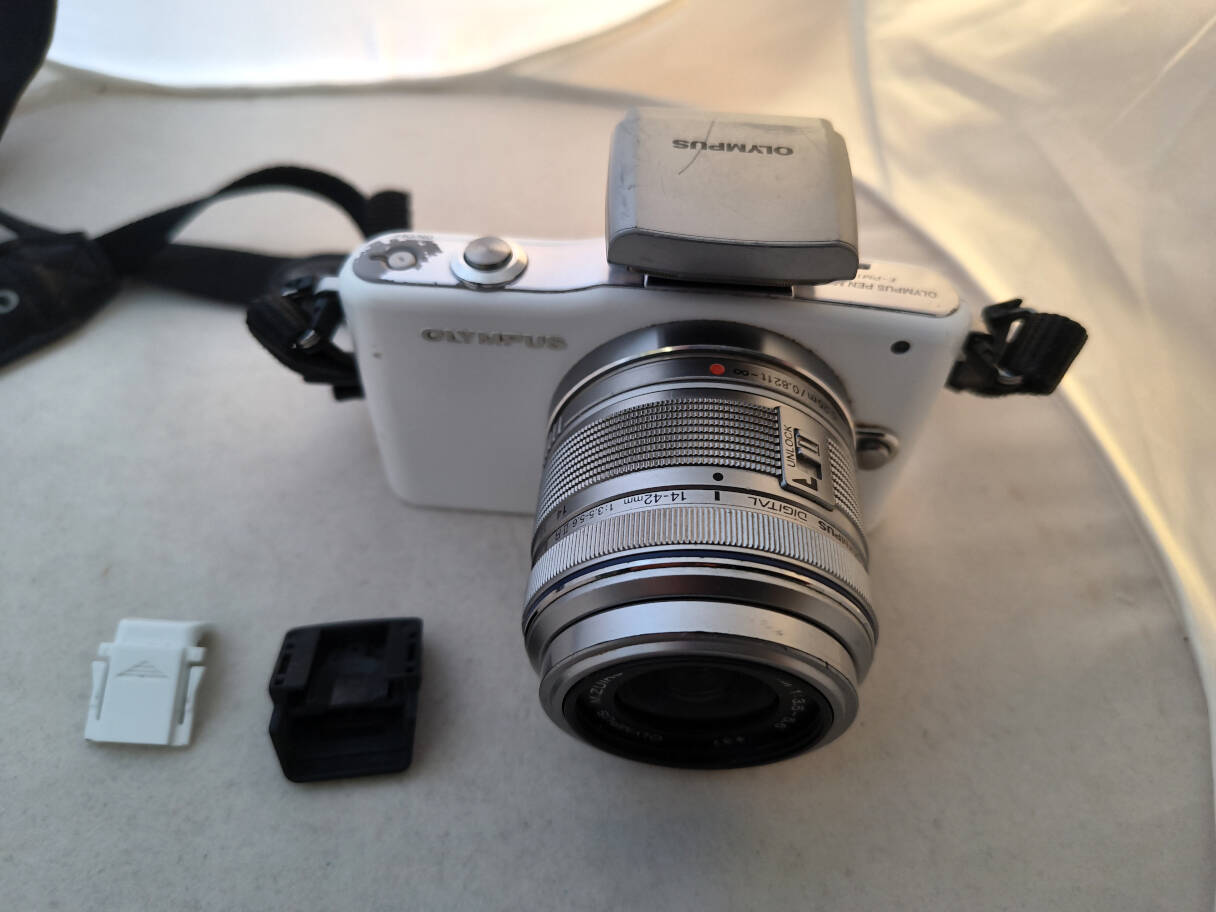
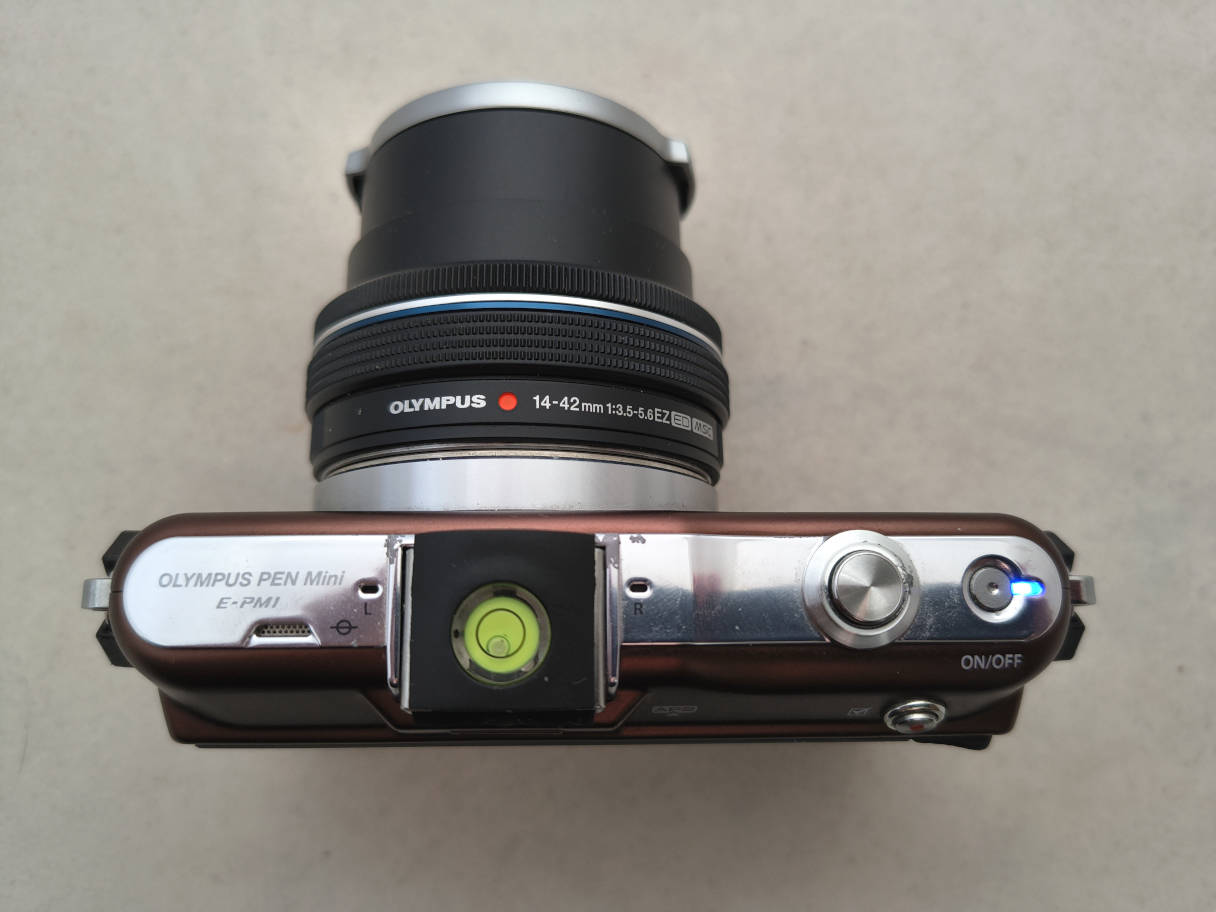
Top with hot shoe (covered), shutter and on/off button. There is no
mode dial, but the mode is the first choice on the screen of the menu.
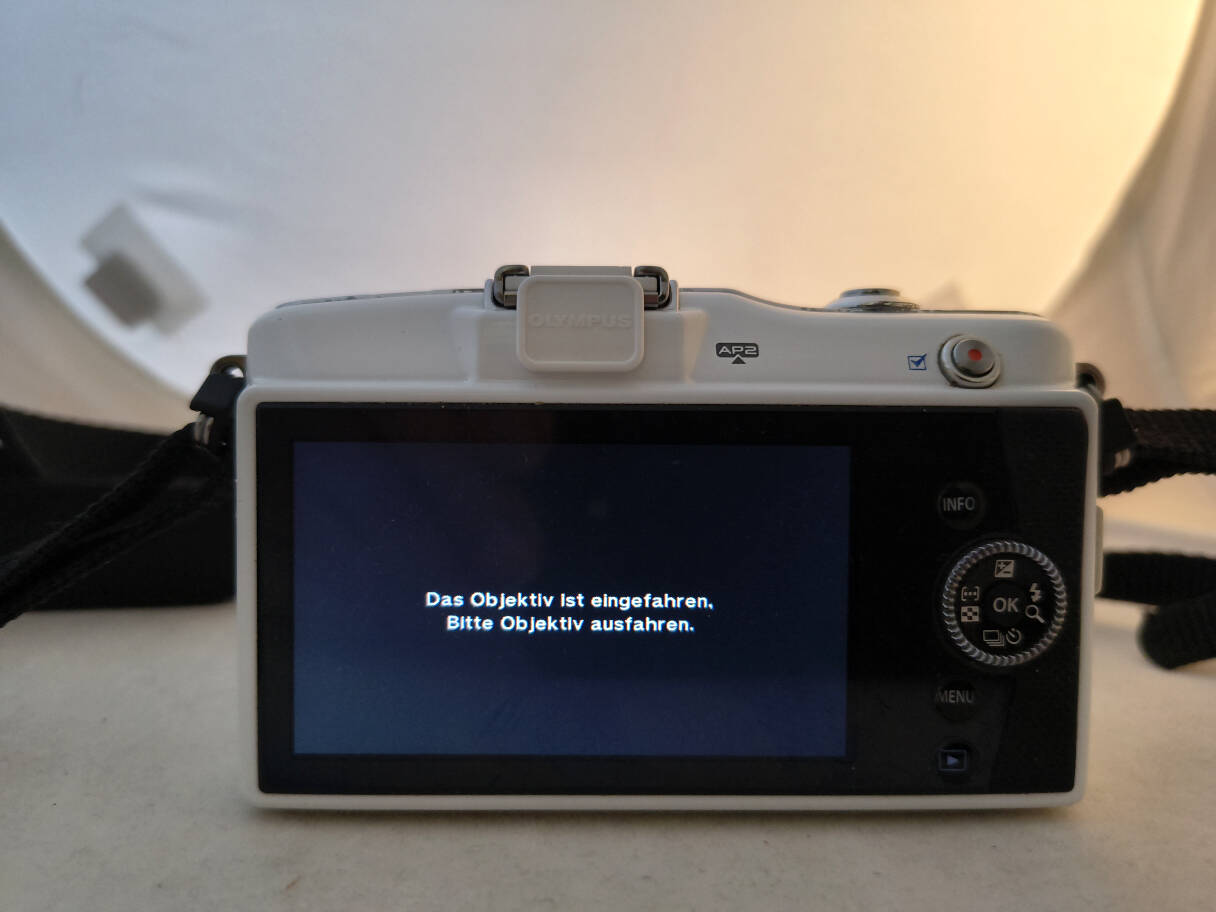
Warning that the lens is not extended.
It
stays on even if the lens is extended. So this lens is broken. Seen the
multitude of broken lenses sold, it seems to be common.
With a working lens IS keeps blinking. So IS is broken as well.
Nevertheless the camera works. Just beware of slow shutter speeds.
Camera with flash unit and hot shoe uncovered.
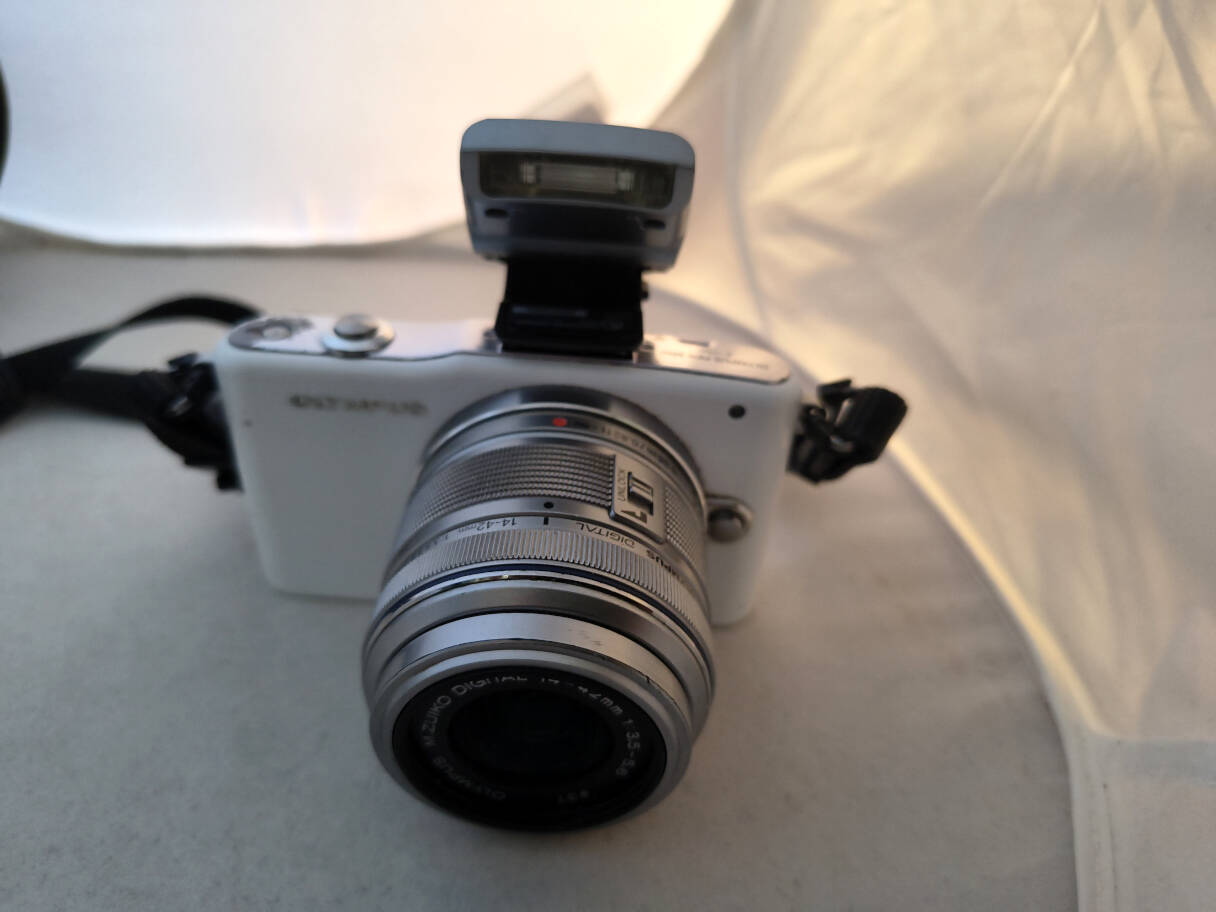
Flash mounted.
Flash risen and ready.
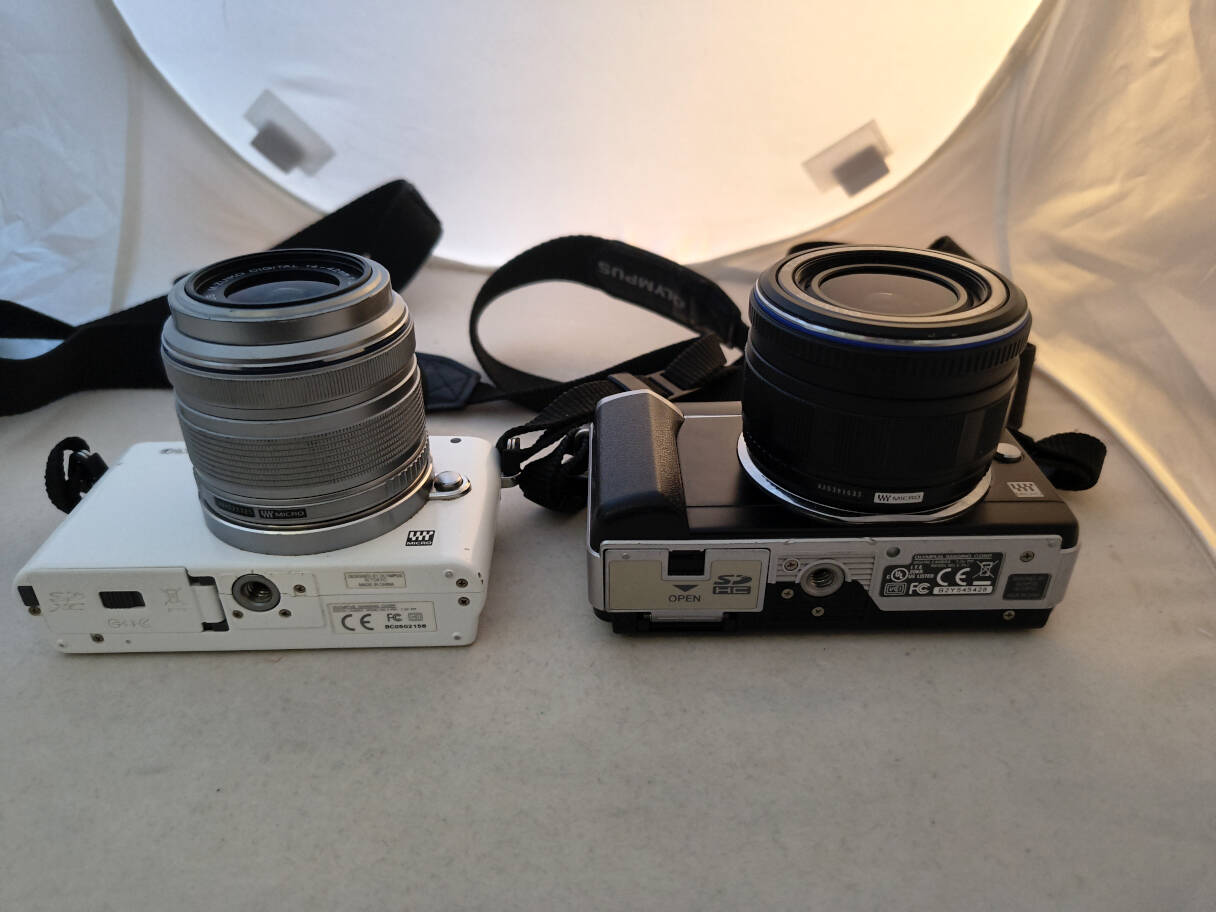
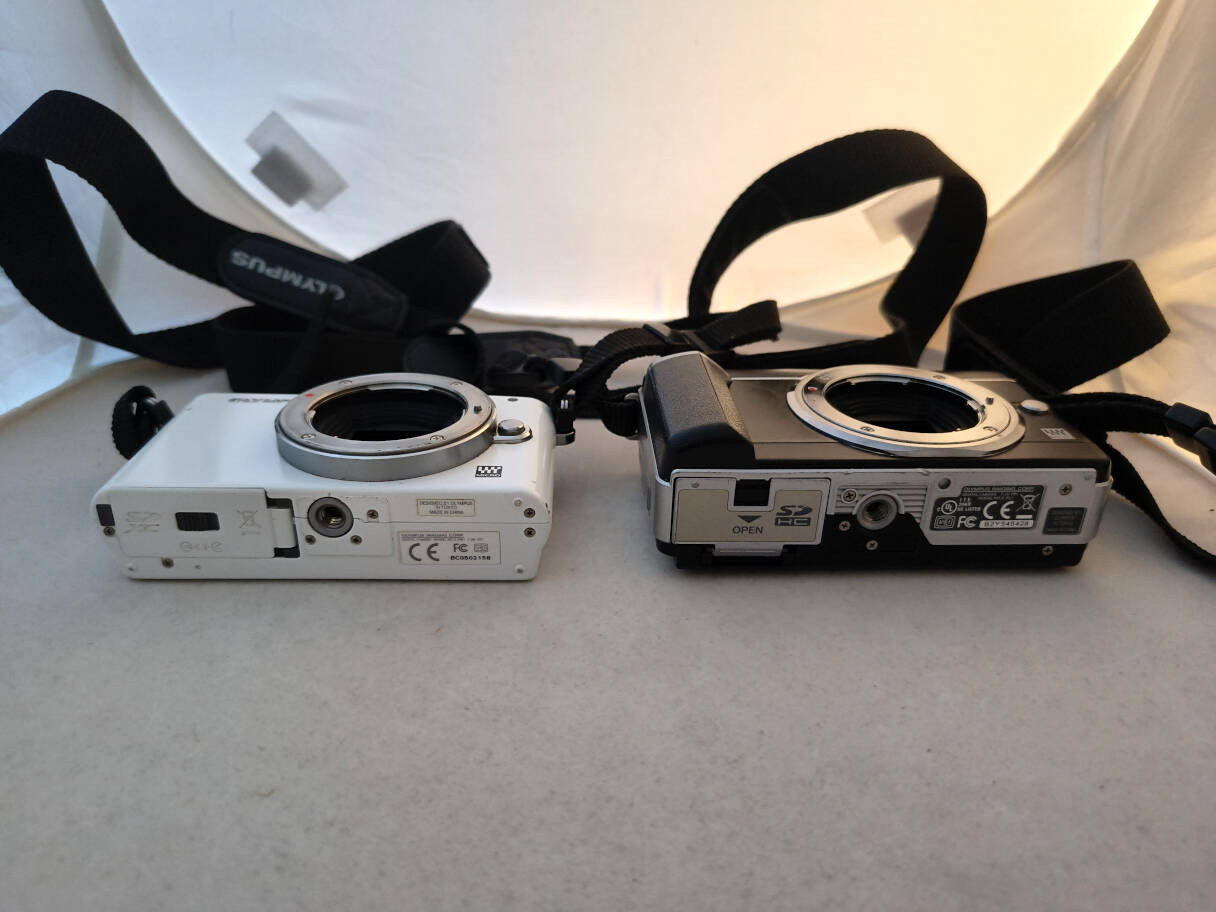
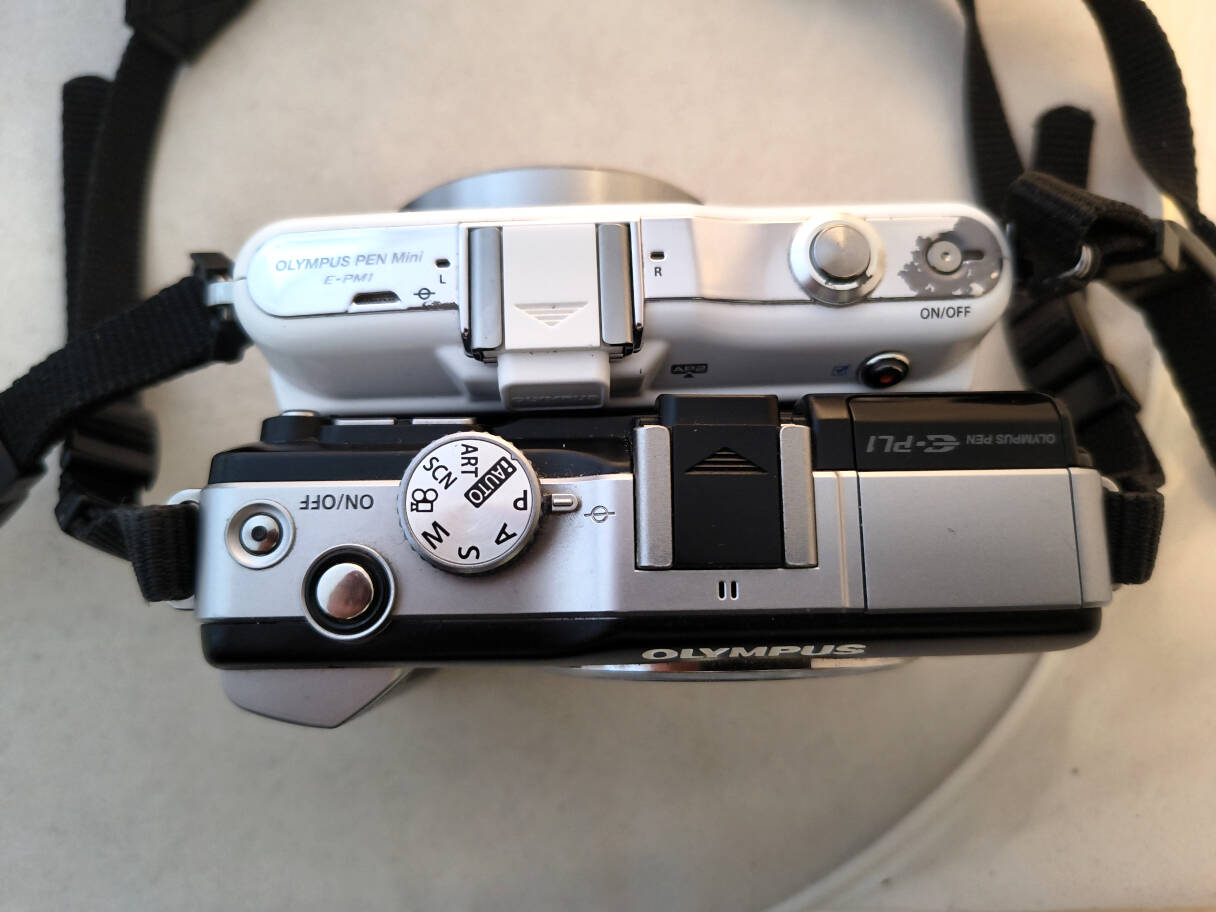
Some pictures with both models for comparison.
Side by side.
The PM is quite smaller, its lens diamerter is smaller as well, but it's longer.
Body comparison.
Lens comparison.
Back to back.
The weight difference is 350 gr. vs. 217 gr, which is quite a lot. Size
is 115 x 42 x 72 vs. 109 x 34 x 64, seen the same features not
neglectable.
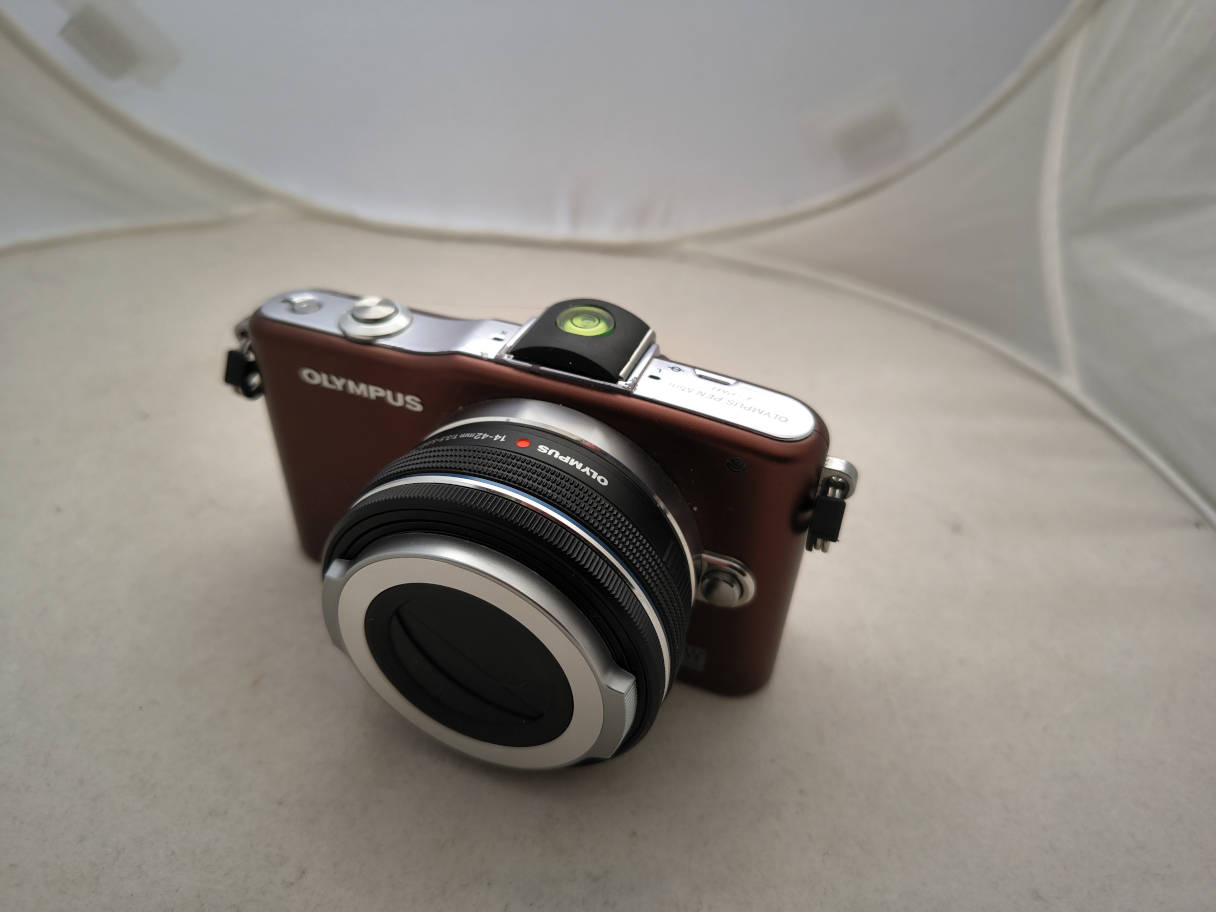
As the PM1 is a nice camera to have and as there is a much smaller
zoom, I bought a third one with a working IS and I got the compact zoom
as well.
This one is in a very good state and it's really compact. The lens cap
is an automatic one, it opens when the lens moves out. Very, very
handy....
Seen from the back.
Lens moved out.
Seen from above.
Seen from below.
They are nice cameras, easy to use. If you want a cheap one second
hand, choose your seller with caution. The E-PM1 is really small. A
Panasonic LUMIX DMC-GM1 is even smaller and lighter, but is has no IS and is much more expensive.
Only when I had these cameras, I ralized, that the sensor format is the
same size as 110 cartridge film. There was a Pentax 110 SLR with really
tiny lenses of superior quality which I own. So there is a project to
use Pentax 110 lenses on my PM1. Link opens in a new window.